Calligraphy for Children: The Art of Beautiful Writing
Summer break was wonderful, but we’re already back in school! This term, I’ll be teaching calligraphy, and I’m super excited about it.
Have you ever looked at a piece of writing that looked more like art than just words? That’s calligraphy! The word calligraphy comes from the Greek words kallos (beautiful) and graphein (to write). Put them together, and you get “beautiful writing.”
Why Calligraphy is Great for Kids
- Creativity and Expression
Calligraphy lets children turn simple words into something unique. Instead of just writing “hello,” they can make it swirl, sparkle, and shine with style. - Improves Focus and Patience
Learning the careful strokes of calligraphy teaches kids to slow down and pay attention. It’s almost like a form of drawing, which helps with concentration. - Better Handwriting Skills
Practicing calligraphy strengthens hand muscles, improves pen control, and can even make everyday handwriting neater. - Relaxation
The slow, steady movements of calligraphy can feel calming, like coloring or doodling.
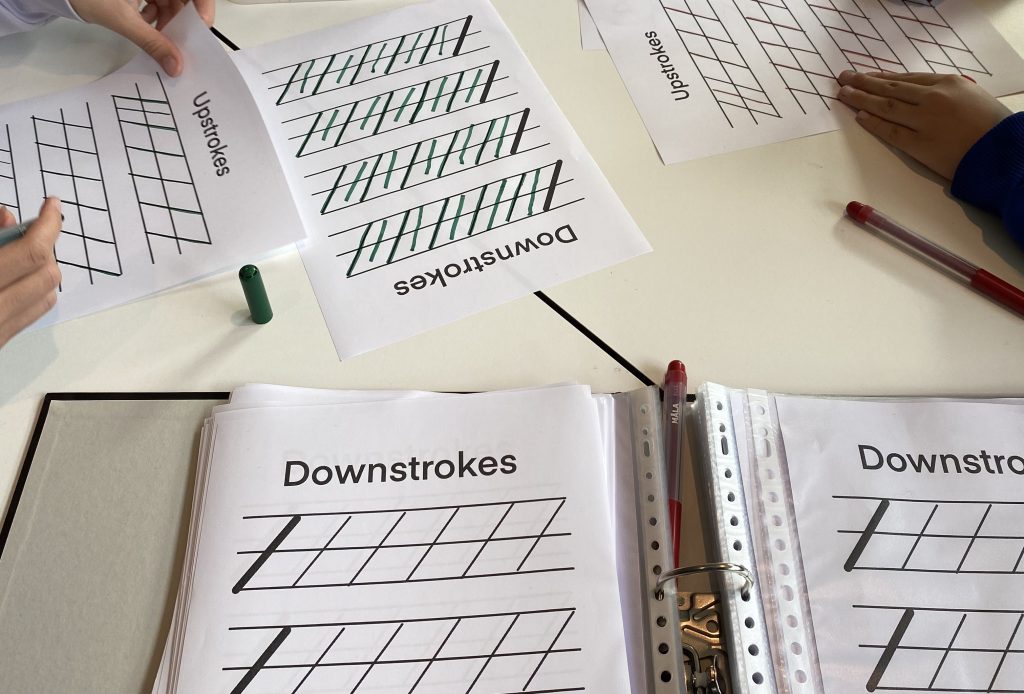
But there is something even more important than beautiful writing, and that’s what we call graphomotricity, the set of motor skills that make writing possible.
Graphomotor skills, sometimes called graphomotor abilities, are the fine motor movements that allow us to use our hands and fingers to write, draw, or perform other precise tasks on paper. These skills combine two important abilities: motor control (how the muscles move) and graphical expression (how those movements are turned into shapes, letters, or drawings).
For children, developing graphomotor skills is an essential step in learning to write. They involve more than just holding a pencil—they require coordination between the eyes, hands, and brain. For example, when a child copies a circle, writes their name, or colors within the lines, they are practicing graphomotor abilities.
Good graphomotor development helps children:
- Gain control of their handwriting.
- Express ideas clearly on paper.
- Build confidence in school activities like writing, drawing, and note-taking.
On the other hand, difficulties with graphomotor skills may show up as messy handwriting, fatigue when writing, or frustration with tasks that require precision. That’s why supporting children with fun exercises, such as tracing shapes, playing with clay, or drawing patterns, can make a big difference.
In short, graphomotor skills are the bridge between a child’s thoughts and the words or drawings they create on paper.
Final Thoughts on Calligraphy and Graphomotricity
Calligraphy and graphomotricity go hand in hand. While calligraphy invites children to explore the beauty of letters and the joy of creative expression, graphomotricity provides the foundation that makes this possible. Without well-developed motor skills, it would be difficult for children to control the pen, shape letters, or enjoy the art of writing.
By practicing both, children not only learn to write beautifully but also strengthen concentration, patience, and coordination. In this way, calligraphy becomes more than just art—it becomes a powerful tool for developing essential abilities that will support learning across all subjects.